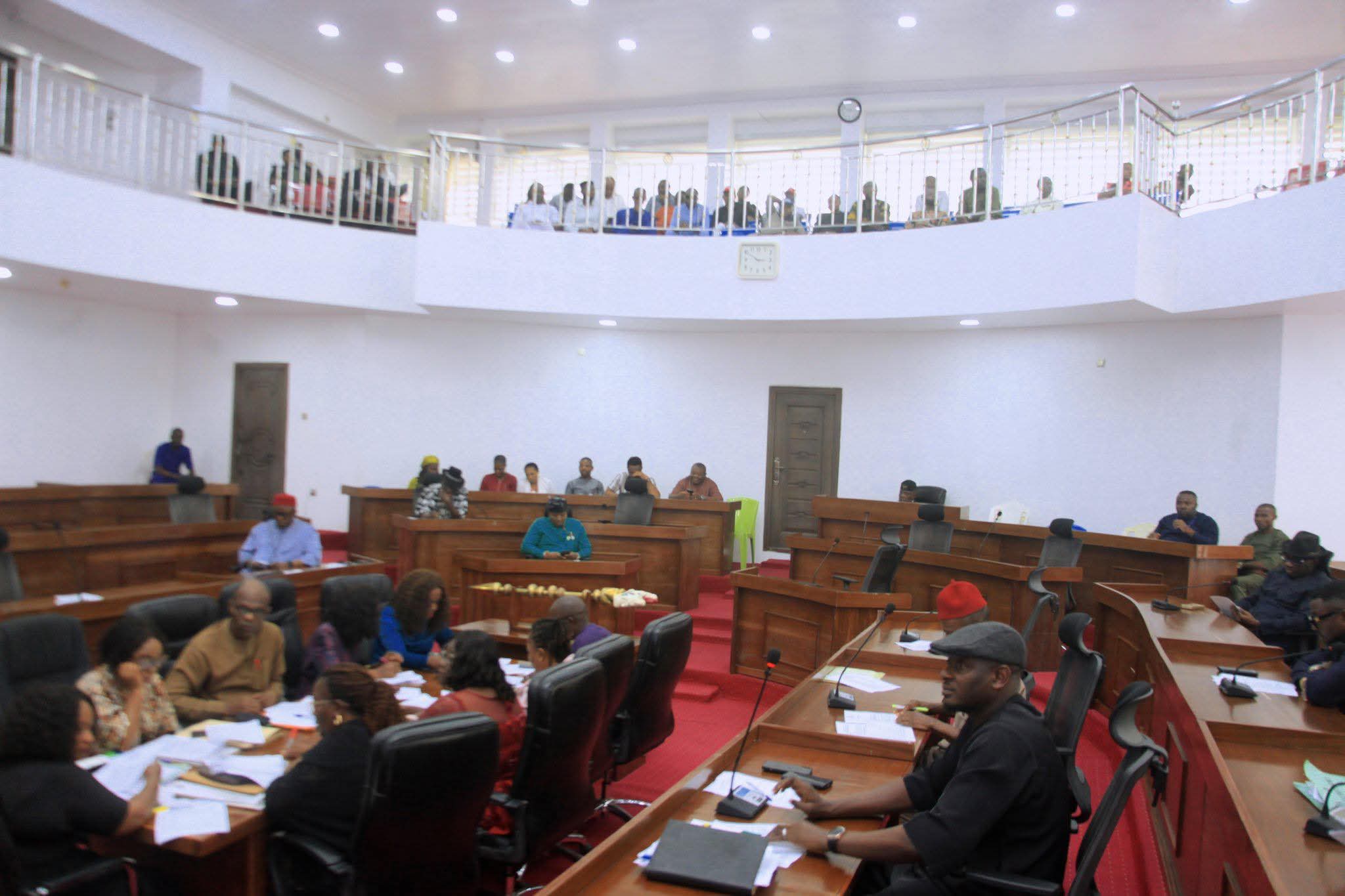
Abia 2027: New Party, Same Politics — Will the Assembly Ever Change?
Abia State’s greatest gamble in the 2027 general election is returning the same group of legislators to the Abia State House of Assembly. This cycle of re-electing incumbents who have shown little independent legislative capacity represents a missed opportunity for governance and accountability in the state.
The core issue is the lack of legislative tact among the current cohort. Effective lawmaking requires more than attendance and voice votes. It demands the ability to draft bills, scrutinize executive proposals, engage in robust debate, and represent constituent interests with independence. When legislators consistently fail to initiate or amend legislation that addresses Abia’s pressing needs in infrastructure, education, healthcare, and economic development, the House ceases to function as a separate arm of government and instead becomes an extension of the Executive.
This dynamic is reinforced by the perception that many members operate as puppets of the Executive Governor. A legislature that cannot assert its constitutional role of checks and balances undermines democracy itself. When the Assembly lacks the capacity to question, review, or reject executive actions where necessary, it erodes public trust and reduces the institution to a rubber stamp. That weakens policy quality and allows decisions to go unchallenged, regardless of their impact on citizens.
The capacity problem compounds these concerns. Lawmaking is technical work that requires research, policy analysis, and an understanding of fiscal and legal frameworks. Without that capacity, the House cannot provide meaningful oversight or produce legislation that translates into tangible improvements for Abia’s communities. The result is a body that is present in structure but absent in influence.
For Abia State in 2027, the real choice is between continuity of this pattern and a demand for legislators with demonstrated competence, independence, and commitment to their constitutional mandate. Returning the same group without evidence of improved performance risks locking the state into another four years of legislative inertia, where the House remains subordinate rather than representative.
The alternative is to prioritize candidates who bring policy expertise, a record of constituency engagement, and the willingness to act independently of executive pressure, even when it is politically inconvenient. That shift is not about opposition for its own sake, but about restoring the balance of power that a functional democracy requires.
The current trend of mass defection to the Labour Party compounds an already fragile legislative system in Abia State and makes the 2027 outlook even more worrisome. Rather than strengthening the House of Assembly, this movement further erodes its institutional integrity and reduces it to a vehicle for political expediency.
Party switching in this context is not rooted in ideology or policy alignment. It is driven by calculation and positioning for the next election cycle. When legislators abandon their original platforms without a clear policy rationale, they signal that party affiliation is transactional, not principled. That undermines the very idea of representative democracy, where voters elect candidates based on stated commitments and policy direction.
The consequence is a weakened legislative structure. A functional Assembly depends on stable party blocs that can articulate coherent positions, develop policy expertise, and hold the Executive accountable from a consistent standpoint. When the membership shifts en masse toward a single party, it creates an illusion of unity while hollowing out genuine debate. Instead of diverse viewpoints and constructive competition of ideas, you get conformity and a single channel of influence that still flows back to the Executive.
This also deepens the capacity problem. Legislators who move primarily for political survival rarely bring the technical skill or legislative discipline needed to improve the House’s output. They carry the same limitations in bill drafting, oversight, and policy analysis, just under a new party banner. The label changes, but the lack of tact and independence remains.
In effect, the trend reinforces the cycle Abia is already struggling with: a House that lacks autonomy, cannot challenge executive dominance, and fails to produce legislation that addresses the state’s real needs. It gives the appearance of political realignment while leaving the underlying dysfunction untouched.
For 2027, the risk is that Abia ends up with a legislature that is not only subordinate to the Executive but also homogenized in composition, with little internal diversity to foster scrutiny or innovation. That is not reform. It is a consolidation of weakness under a different flag.
The path forward requires more than party realignment. It requires voters to demand legislators who demonstrate policy competence, constituency commitment, and the courage to maintain independence regardless of party label. Without that, the Labour Party trend will not strengthen the system. It will further dilute it.